Easy Planting Ideas
Simple planting ideas for creating a beautiful garden without making it complicated.
You don’t need to be an experienced gardener to create an outdoor space filled with plants you love. Starting with a few reliable choices and keeping things simple can make planting feel much less overwhelming.
Whether you have borders, pots or just a small patio, these easy ideas will help you create a garden that feels full, natural and welcoming.
5 Easy Planting Ideas
1. Start With Easy-to-Grow Plants
If you’re new to planting, start with plants that don’t need constant attention. A few reliable varieties can give you plenty of colour and greenery without making the garden feel like another job on your list.
Lavender, hardy geraniums, sedum and many ornamental grasses are great options for an easy-going garden. Choose plants that suit the sunlight and soil in your space and they’ll be much easier to look after.
🌿 Gather & Bloom Tip
Start with three or four plant varieties rather than buying lots of different ones. Repeating a few favourites makes choosing plants easier and can make your garden look much more pulled together.
A beautiful garden doesn’t need to be complicated to look good.

2. Repeat Plants Around the Garden
Using the same plants in several places is one of the easiest ways to make a garden feel more connected. Instead of choosing something completely different every time you find a gap, repeat a few of your favourite plants throughout the space.
For example, lavender, grasses or hardy geraniums can appear in different borders or along a pathway. The repetition helps everything flow together and can make even quite simple planting look more considered.
🌿 Gather & Bloom Tip
Pick two or three favourites and repeat them. You don’t need every section of the garden to be different — repeating plants can actually make the whole space feel calmer and more put together.
Less variety can sometimes create a much bigger impact.
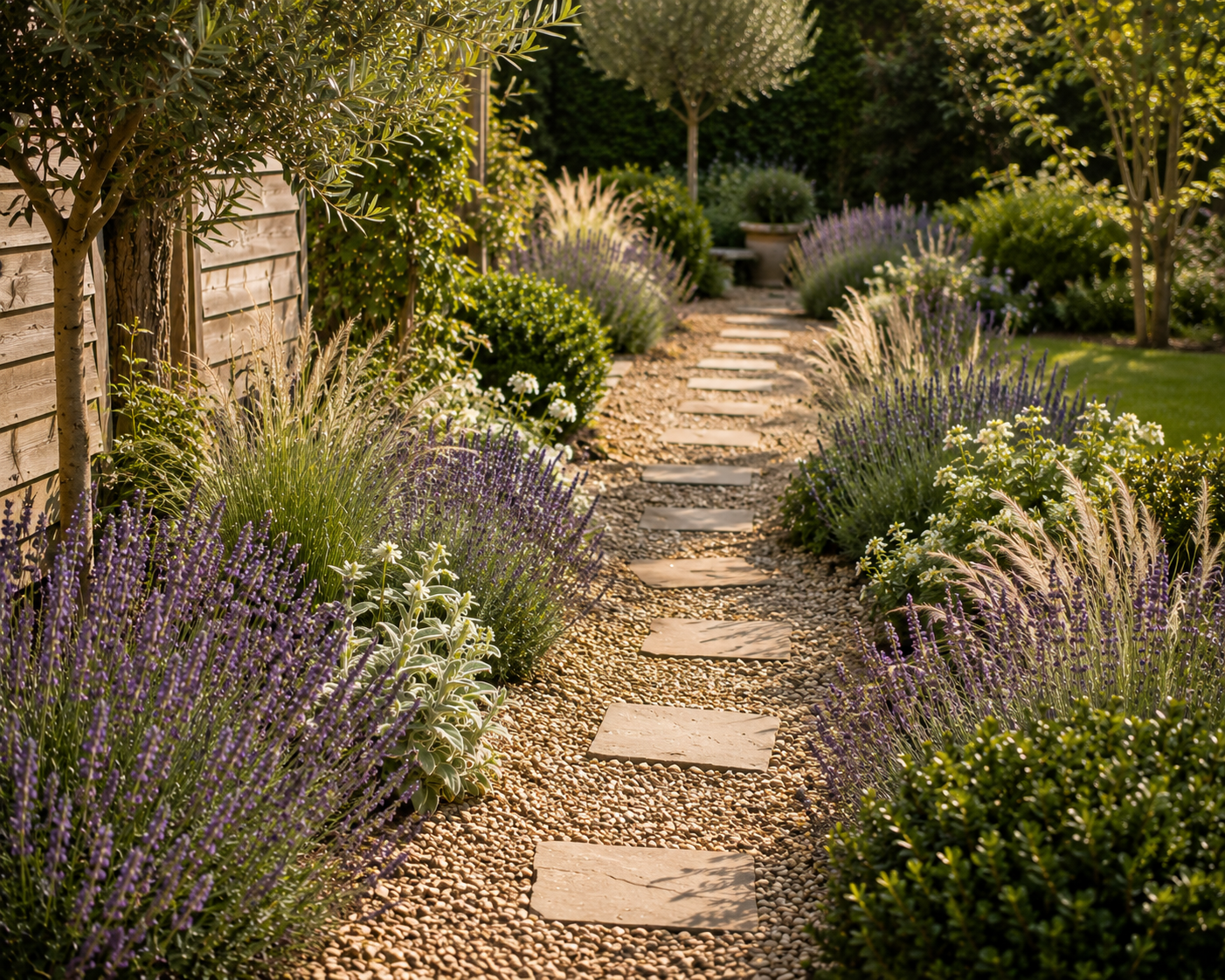
3. Mix Flowers With Evergreen Greenery
Flowers bring beautiful colour to a garden, but adding evergreen plants alongside them helps the space look fuller even when the flowers aren’t at their best.
Use simple evergreen shrubs or leafy plants as the backbone of your planting, then weave flowering plants between them. You’ll still get plenty of seasonal colour, but the garden won’t suddenly feel empty once the flowers begin to fade.
🌿 Gather & Bloom Tip
Think of greenery as the base and flowers as the finishing touch. You don’t need every plant to flower for your garden to look beautiful.
A little structure underneath the colour can keep your garden looking lovely throughout the seasons.

4. Plant in Layers
Think about planting at different heights rather than keeping everything at the same level. Taller plants towards the back, medium-height plants through the middle and lower plants towards the front can make even a small border feel fuller and more established.
You don’t need lots of different varieties to achieve it. Grasses or taller flowering plants can provide height, with lavender and other medium plants underneath and low-growing greenery softening the front of the border.
🌿 Gather & Bloom Tip
Think “tall, middle, low” when you’re planting. It’s a really simple rule that takes away some of the guesswork and helps avoid those awkward empty-looking gaps.
Layering plants creates fullness without needing to fill every inch of the garden.
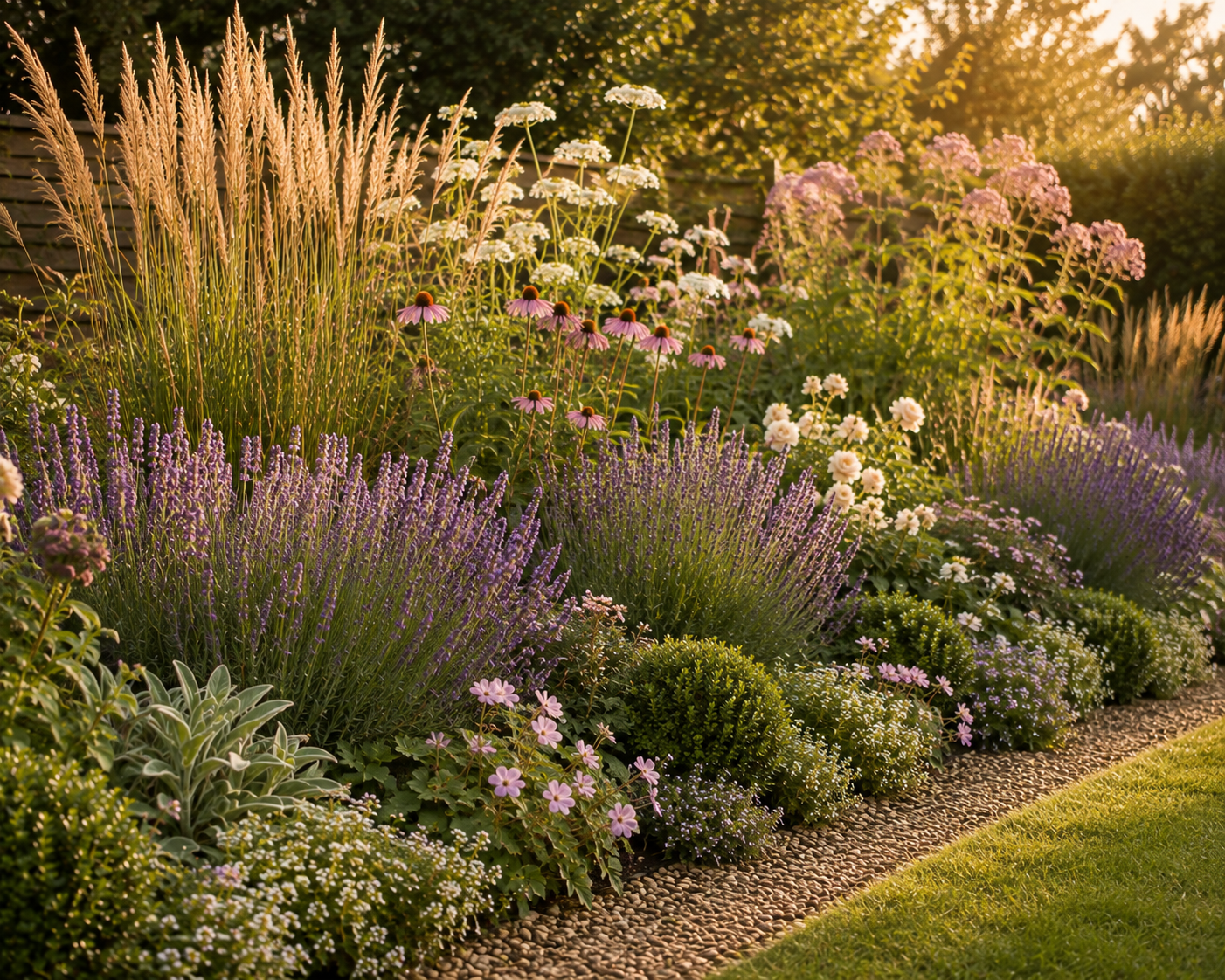
5. Fill Gaps With Pots
Not every empty space in the garden needs to be planted permanently. If a border has a gap, placing a pot amongst the planting is an easy way to add instant colour and interest while you decide what you eventually want there.
Pots are also brilliant for filling seasonal gaps. When one area starts looking a little bare, simply move a planted container into the space to give it a quick refresh.
🌿 Gather & Bloom Tip
Think of your pots as movable pieces of your garden. Rather than leaving them in the same place all year, move them around whenever an area needs a little lift.
Sometimes you don’t need more plants — you just need to move what you already have.
