Pots & Containers
Simple ways to use pots and containers to bring colour, texture and interest to any outdoor space.
You don’t need large borders or a huge garden to create beautiful planting. Pots and containers are one of the easiest ways to transform a patio, doorstep or forgotten garden corner.
By mixing different sizes, shapes and plants, you can create displays that look considered without spending a fortune — and the best part is that you can move and change them whenever you fancy something different.
5 Simple Ways to Style Pots & Containers
1. Group Pots Together
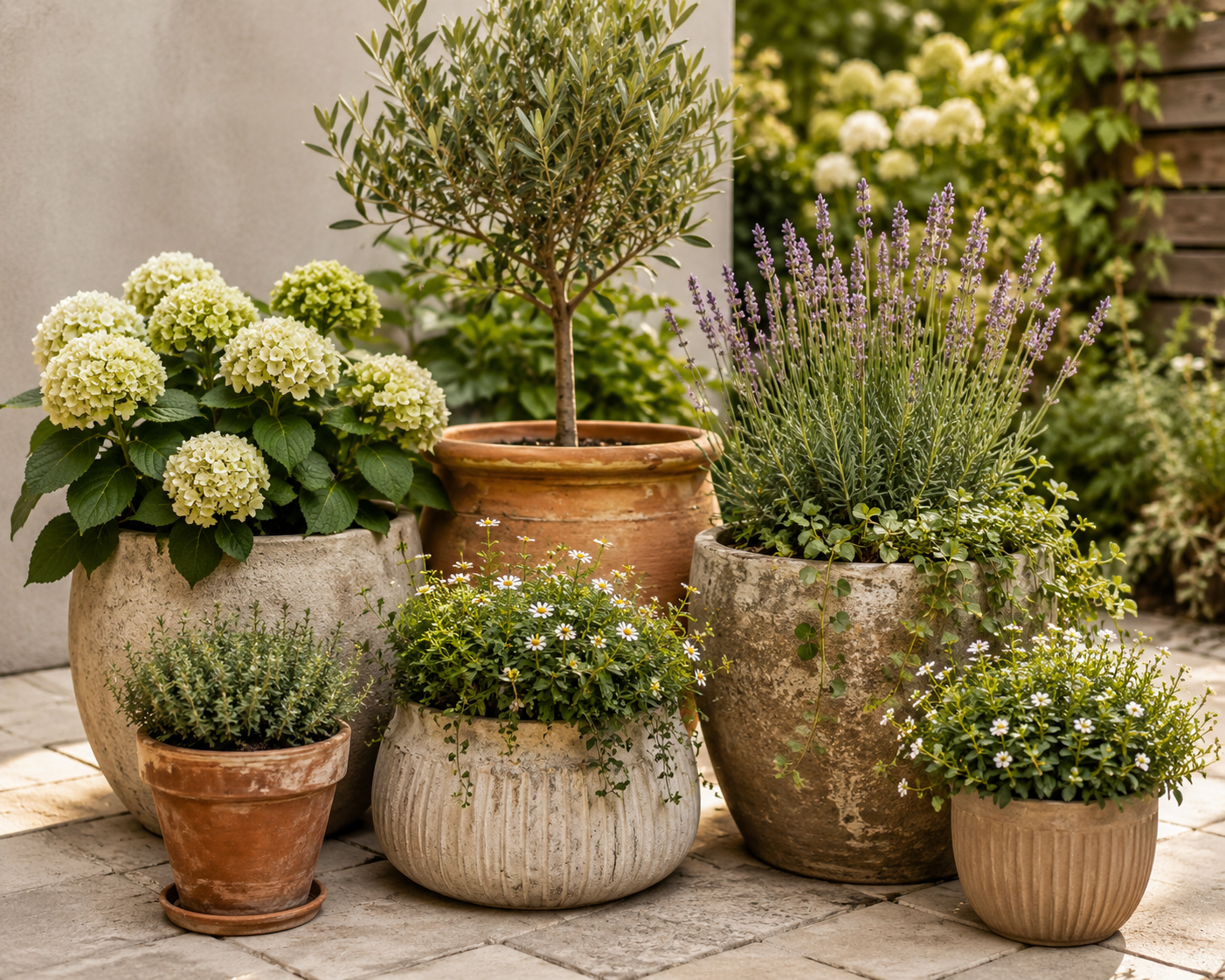
Instead of spreading individual pots around the garden, bring several together to create one stronger display. A small group instantly looks more intentional and can add interest to an otherwise empty patio, doorstep or corner.
Try combining three or five pots rather than arranging them in a straight line. Keep them fairly close together so they feel like one display.
🌿 Gather & Bloom Tip
Start with what you already own. Your pots don’t need to match. Terracotta, warm stone, cream and natural finishes can look beautiful together — especially when the plants provide the colour.
A few simple pots grouped together can have far more impact than lots of pots scattered around the garden.
2. Mix Different Heights & Sizes
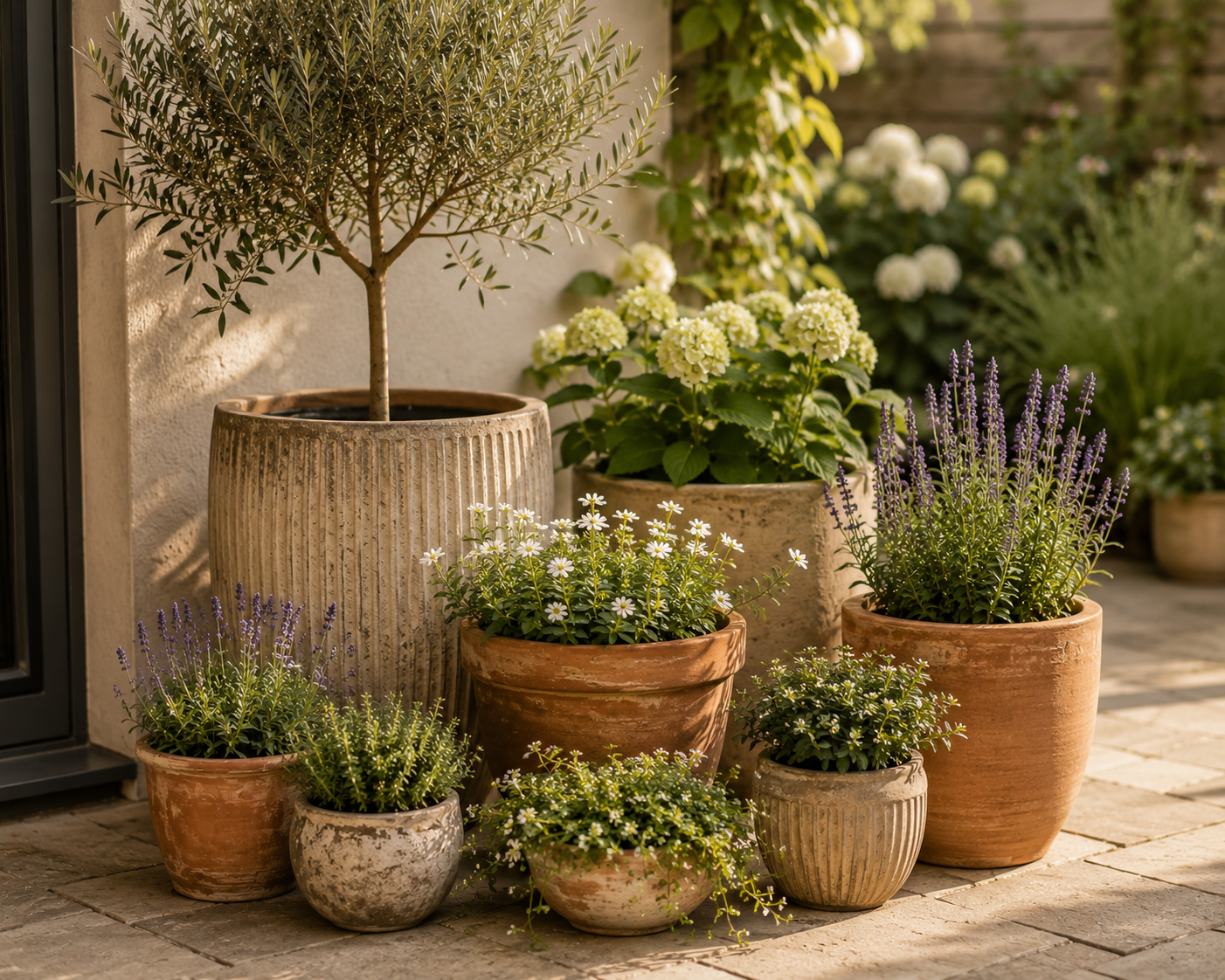
Using pots that are all the same height can make a display feel a little flat. Mixing taller planters with medium and smaller pots creates layers and helps draw your eye through the arrangement.
Let the plants add height too. A small olive tree, ornamental grass or taller flowering plant can sit behind lower herbs and trailing plants to create a fuller display.
🌿 Gather & Bloom Tip
Use the “tall, medium, small” rule. Start with one taller pot or plant, add one or two medium-sized pots and finish with smaller ones towards the front. It’s an easy way to make a collection look naturally put together.
Different heights create interest — even when all the pots and plants are quite simple.
3. Choose Plants for the Right Spot
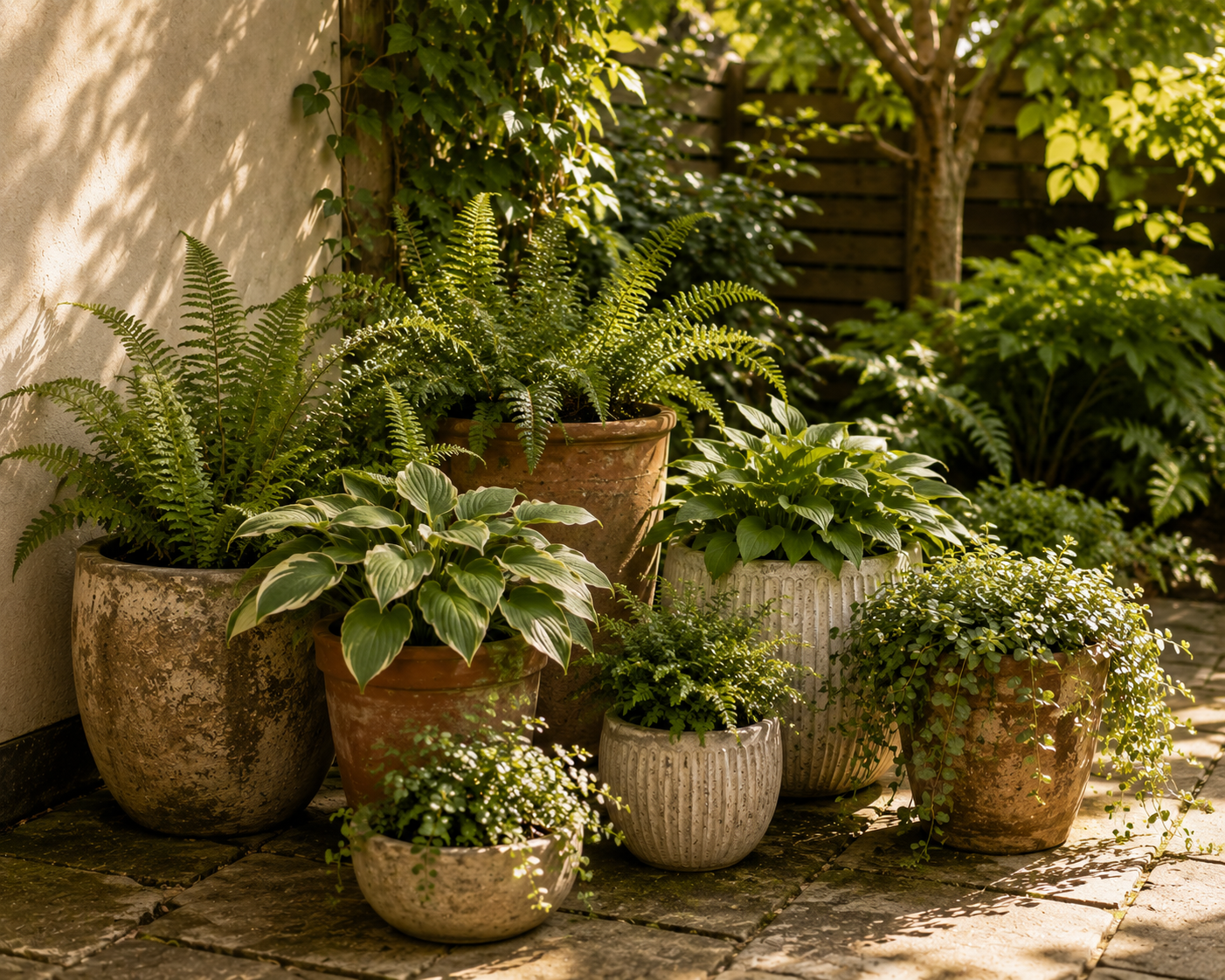
It’s tempting to choose plants simply because you love how they look, but they’ll be much easier to care for if they suit where the pot is going.
Before buying, notice how much sun that part of your garden receives. Lavender and many Mediterranean-style plants generally prefer sunnier positions, while plants such as ferns and some hostas can work beautifully in shadier areas.
🌿 Gather & Bloom Tip
Choose the position before you choose the plant. Knowing whether the spot is sunny, partly shaded or mostly shaded makes shopping for plants much easier — and gives them a better chance of thriving.
The right plant in the right place means less work and a garden that looks better for longer.
4. Add Seasonal Colour
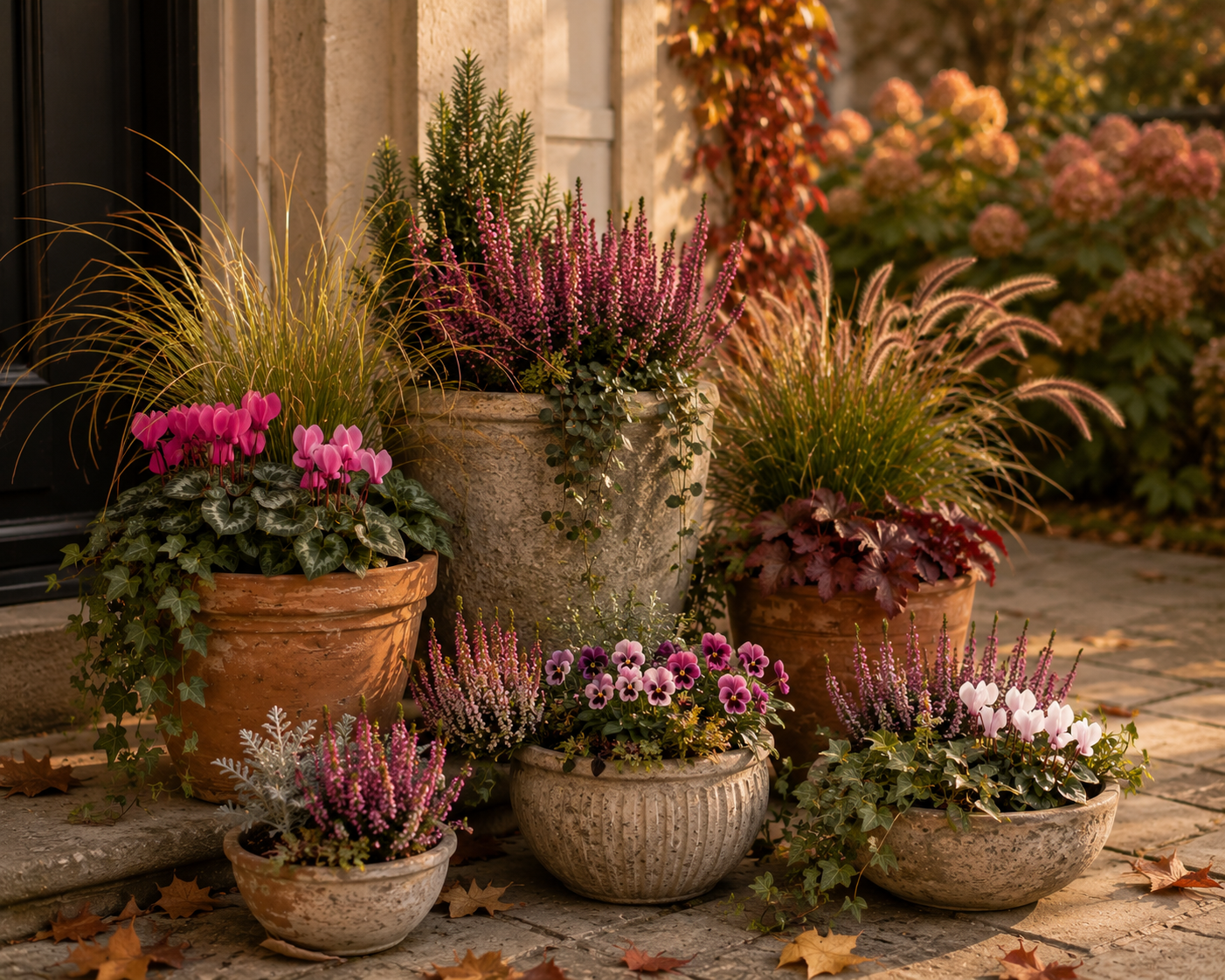
One of the best things about planting in pots is how easily you can change the look of your garden throughout the year. You don’t need to replace everything — simply changing one or two smaller pots can bring a fresh seasonal feel to the whole display.
For autumn, try heathers, cyclamen, violas and ornamental grasses. As the seasons change, those smaller pots can be refreshed while your larger evergreen plants stay in place.
🌿 Gather & Bloom Tip
Keep your larger pots simple and change the smaller ones with the seasons. It’s an easier and more affordable way to keep your garden looking fresh without constantly buying new plants.
A little seasonal colour can completely change the feel of an outdoor space.
5. Use Pots to Transform Forgotten Corners
That empty corner beside a fence, shed or back door doesn’t need a big makeover. A few well-placed pots can quickly turn an overlooked space into something that feels like part of the garden.
Start with one larger pot to anchor the area, then add two or three smaller ones around it. Greenery, grasses and a little seasonal colour will soften hard edges and make the space feel much more inviting.
🌿 Gather & Bloom Tip
Before buying anything, move some of your existing pots around. You might already have everything you need to completely change a forgotten corner.
Sometimes transforming a space is simply about using what you already have in a different way.
